
Polar vs Lemon Squeezy
for indie hackers
This is one of the more interesting payment-stack decisions for indie founders because both products promise merchant-of-record relief, subscriptions, and global selling. The catch is that they are not built with the same mental model. Polar feels like a developer billing platform with merchant-of-record leverage. Lemon Squeezy feels like a software commerce platform with broader out-of-the-box selling surfaces.
Polar pricing
4% + 40c
Official docs position Polar at 4% + 40c per transaction with no monthly minimums.
Lemon pricing
5% + 50c
Lemon Squeezy publicly lists 5% + 50c for ecommerce transactions.
Polar adapters
12
Polar documentation highlights 12 supported framework adapters.
Lemon methods
20+
Lemon Squeezy markets 20+ payment methods and localized checkout coverage.
Side-by-side comparison
| Category | Polar | Lemon Squeezy |
|---|---|---|
| Pricing headline | 4% + 40c per transaction | 5% + 50c per transaction |
| Core positioning | Billing platform for software with MoR and developer adapters | Merchant of record for software companies with broader commerce tooling |
| Subscriptions | Recurring billing, product benefits, customer portal, usage-oriented direction | Weekly, monthly, yearly subscriptions plus trials, upgrades, downgrades, and cancels |
| Digital product fit | Strong for software, licenses, GitHub access, and developer products | Strong for software plus templates, downloads, bundles, and storefront-style selling |
| Developer surface area | Adapters, SDKs, API-first workflows, open-source positioning | REST API, webhooks, Lemon.js, hosted and embedded checkout patterns |
| Payment breadth | MoR convenience and global tax handling, but less checkout breadth marketed upfront | 20+ payment methods, PayPal support, and broader commerce-oriented checkout messaging |
| Best for | Developer-first SaaS, AI products, and entitlement-heavy software | Mixed software + digital-product businesses that want breadth and simpler storefront workflows |
What the real tradeoff looks like
On paper, this looks like a simple merchant-of-record comparison. In practice, it is a question about product philosophy. Polar's own documentation frames the platform around software billing, tax compliance, automated access delivery, and a developer workflow that includes framework adapters and SDKs. Lemon Squeezy frames the product around payments, subscriptions, digital products, storefront-style selling, broader checkout options, and easier global software commerce.
That difference matters because the best payment stack is usually the one that matches how your business is operated day to day. If your default instinct is to think in APIs, customer entitlements, repo access, app access, and integration surfaces, Polar feels natural. If your instinct is to think in offers, bundles, checkout flows, payment methods, and mixed software-plus-download businesses, Lemon Squeezy often feels more complete right away.
Pricing is another place where people oversimplify. Polar currently markets 4% + 40c with no monthly minimums, while Lemon Squeezy publicly lists 5% + 50c for ecommerce transactions. That does not automatically make Polar the better choice. If Lemon Squeezy's payment-method breadth, storefront patterns, or digital-product tooling save you enough time, the spread can be rational. But ignoring the spread is lazy. At scale, a one-point fee delta plus ten cents per transaction becomes operationally meaningful.
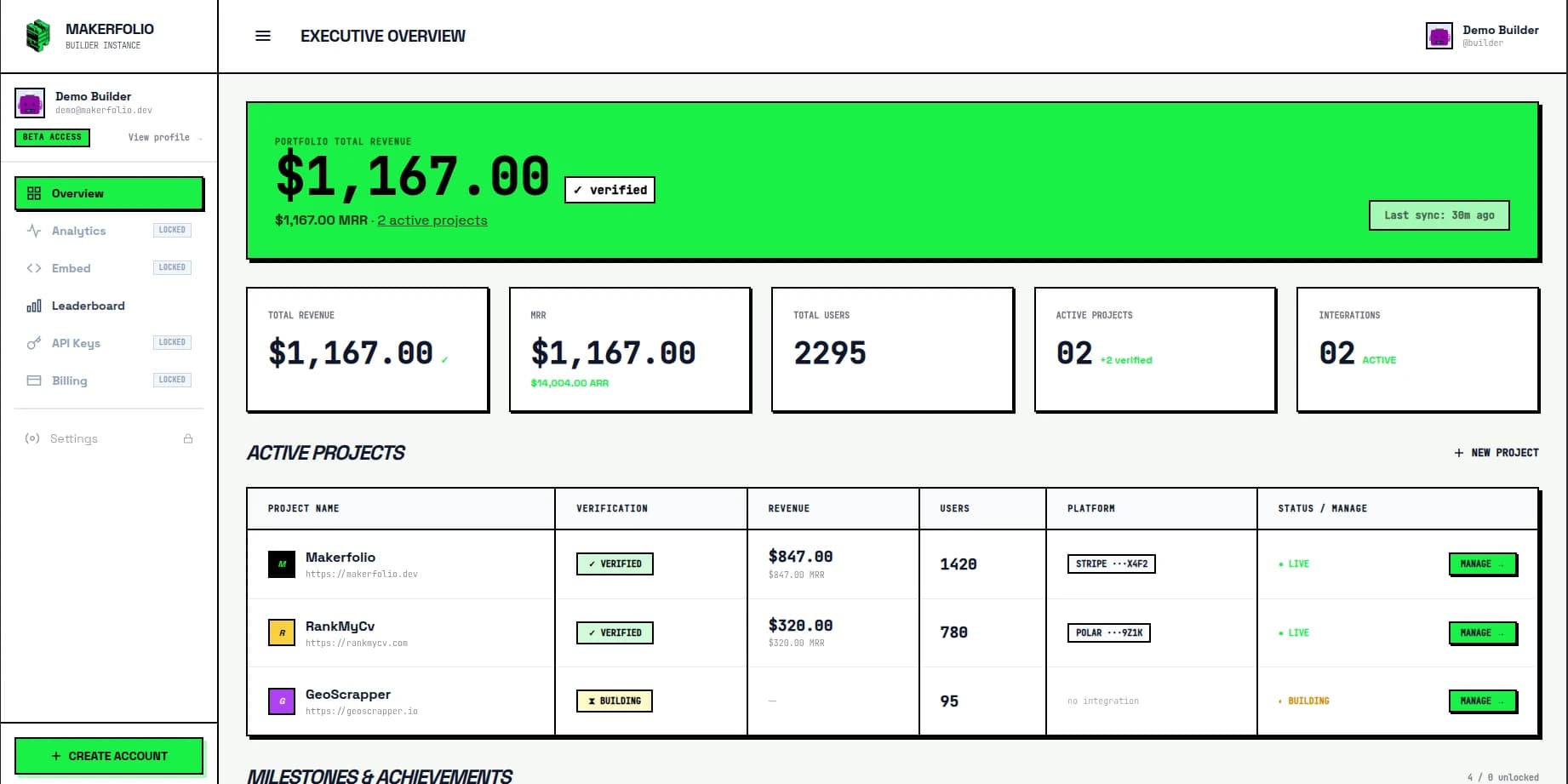
There is also the reporting problem. Neither processor decision ends at checkout. Once subscriptions, trials, one-time purchases, failed renewals, and cross-product revenue start moving, you need a cleaner reporting layer than the default processor view. That is where Makerfolio becomes useful: not as another processor, but as the place where founders separate recurring from one-time revenue and turn fragmented billing data into something they can actually trust and publish.
Use Polar if
You care about developer ergonomics, adapters, and an API-first integration surface.
Your product sells software access, licenses, repo access, or benefits that map well to Polar's entitlement model.
You want merchant-of-record coverage but still think like a product engineer rather than a store operator.
Use Lemon Squeezy if
You sell a mix of subscriptions, one-time downloads, templates, bundles, or educational products.
You want merchant-of-record coverage and broader checkout/payment-method breadth out of the box.
You prefer a more commerce-shaped product with strong no-code and storefront-style flows.
Official references worth reading
“Traditional MoR solutions charge 5-8% per transaction plus monthly fees... Polar's Solution: 20% lower fees at just 4% + 40c per transaction with no monthly minimums.”
Polar Docs →
“You can create subscriptions with yearly, monthly, weekly and daily billing intervals.”
Lemon Squeezy Docs →
“With Lemon Squeezy, there is zero setup required and you can start accepting payments immediately.”
Lemon Squeezy Docs →
Sources used in this comparison
Keep reading
Stripe vs Polar for Indie Hackers
Compare Polar against the more infrastructure-heavy default in Stripe.
Stripe vs Lemon Squeezy for Indie Hackers
See how Lemon Squeezy stacks up against Stripe's billing-first model.
Stripe vs Polar vs Lemon Squeezy
Use the three-way comparison if you want the broader market view.
Best payment processor for indie hackers
Go deeper on decision criteria instead of reading comparisons in isolation.
Whichever processor you choose, do not trust raw dashboard totals.
Connect your stack to Makerfolio and separate recurring revenue, one-time sales, and public proof the right way.
Start for free →